What I Mean by a Trust Recession
People are slower to buy than they used to be. They're more cautious with their money. They're asking more questions and looking for proof, not promises.
A lot of buyers have been burned. By polished launches. By programs that sounded complete but turned out to be partial solutions. By offers that oversold the outcome and underdelivered on the support.
So instead of impulse purchases, we're seeing hesitation. Longer decision-making cycles. A level of discernment that wasn't there a few years ago.
That doesn't mean your offer is broken. It means the market is more mature. And a more mature market requires a different kind of infrastructure to sell into it effectively.
The Myth of Passive Income
Offers don't sell passively by default. They become more passive when you make a deliberate decision about how they'll be sold — with your time, or with your money.
If you're not spending money to distribute your offer, you're spending attention. That's not a failure. It's a tradeoff. But it's one worth naming honestly, because a lot of the frustration founders feel around selling comes from expecting one without committing to the other.
The choice matters. And the systems that support that choice matter just as much.
Where Trust Actually Breaks Down
Here's where the real issue shows up.
A lot of people have bought something — a program, a course, a container — thinking they were buying an outcome, when they were actually buying one piece of a larger system. They learned how to create something but not how to market it, sell it, or support it long term.
You can't build a complete picture with missing pieces and then blame yourself when it doesn't come together.
That gap creates frustration. And over time, repeated often enough across an entire market, it erodes trust. Not just in the specific offer that fell short — but in the category. In the process. In the people selling it.
That's the trust recession. It didn't come from nowhere.
Why Transparency Matters More Than Ever
In a trust recession, hype doesn't convert. People don't want exaggerated claims or "set it and forget it" language. They want the full picture — what's actually involved, what effort is required, what tradeoffs they're making, and what support exists after the purchase.
Transparency isn't a differentiator anymore. It's the baseline. The price of entry for selling anything to a buyer who has been burned before.
Why I Work the Way I Do
This is also why I work as a service provider rather than a coach.
In a coaching container, you're constantly working with what someone knows, what they don't, and what they'll realistically implement on their own. And the truth is, a lot of founders don't want another lesson. They don't have the bandwidth to learn another system or manage another tool. They want it handled — and then they want to understand what was built and why, without being buried in the details.
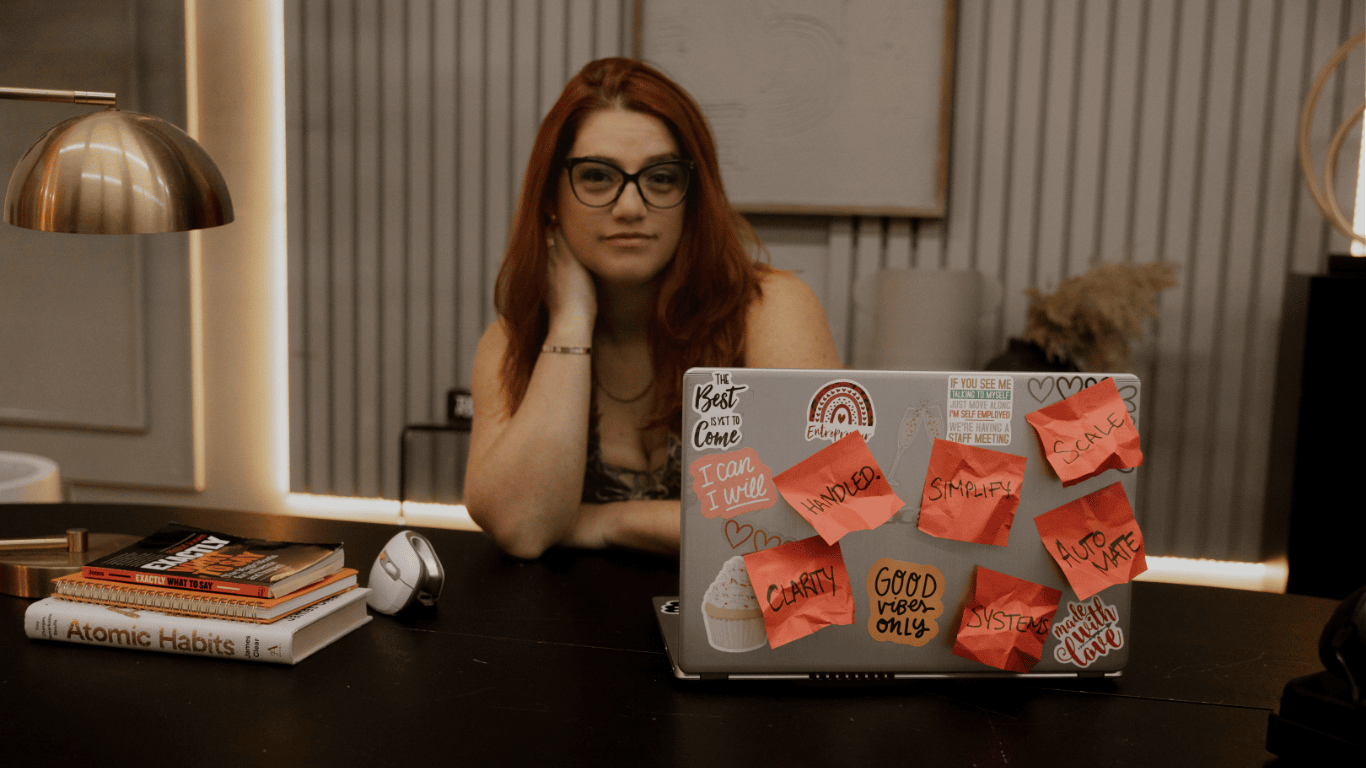
That's the work I do. I build the backend that hosts, sells, and delivers your offer. I set up the systems that onboard clients and keep the operation running cleanly. And when it's done, I walk you through exactly how it works — so you're informed without being overwhelmed.
You stay in your area of expertise. Your business gets infrastructure that actually supports it.
The Real Decision
You don't need to burn what you've built. You don't need to chase passive income as a concept or overhaul your entire offer. You just need to decide how you want to sell what you've already created — with your time or with your money — and make sure the systems underneath that decision can actually hold it.
That's what holds up when trust is fragile. Not louder marketing. Not more launches. A backend that's built for the market you're actually selling into.